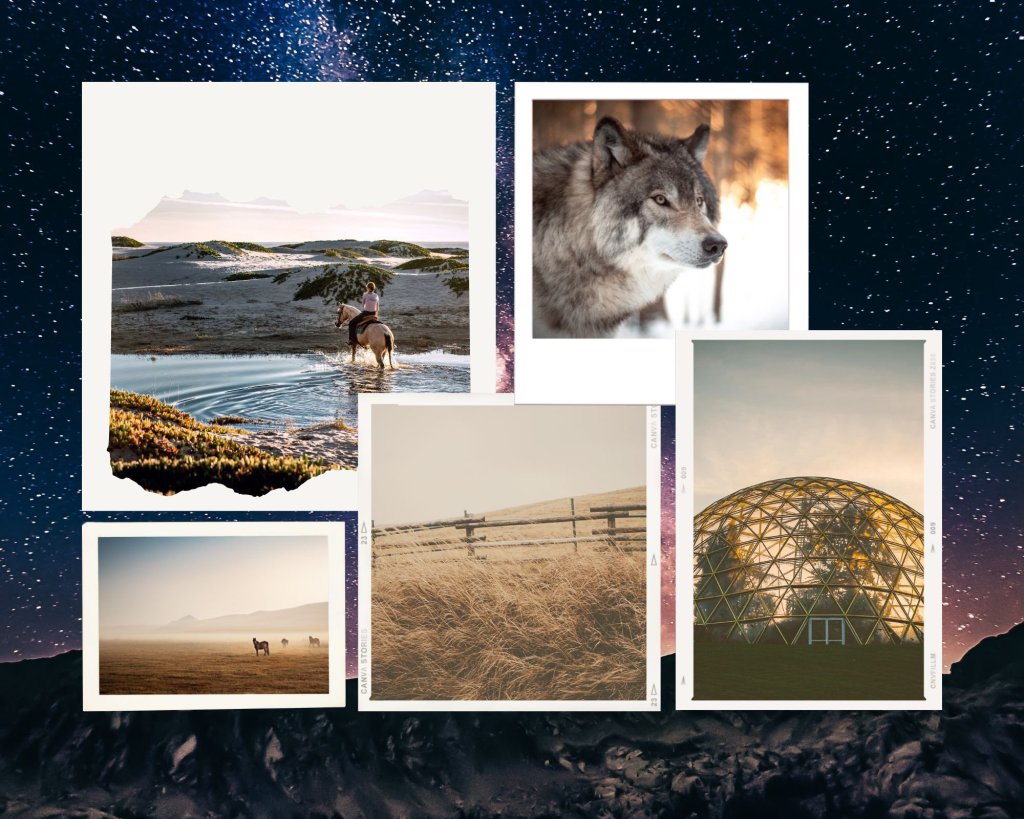
Pitch:
The last horse wrangler in America saves her herd of fifty Arabian horses by emigrating them to a Martian colony, but the red planet may be even more dangerous than the dying one CADY TALLON left.
A female-driven conversation on climate change, agency for women, navigating complex trauma as an adult, and humanity’s relationship with technology and nature, THESE WILD HORSES is a speculative, upmarket novel written for adults about loss and regret but also hope, love, and the magic of horses.
Words: 85,000 words
Genre: Adult, Speculative, SFF, Genre-blending
Style: Lyrical x Plot-Driven
Atmosphere: Fantastical, Gothic, Surreal, Sentimental, Whimsical, Tense, Magical, Mysterious

Readers of…
Becky Chambers and Ethan Chatagnier, who search for social themes and found family in science fiction, will enjoy THESE WILD HORSES. Or readers of Rumaan Alam that like atmospheric pieces centering on fear response and assumptions. Those fond of the tropes found in Dune or The Red Mars Trilogy, but who like seeing those same tropes and systems challenged or broken, will appreciate the world-ending stakes of this book.
THESE WILD HORSES. Voice-driven and sensitive, this narrative centers on animals, nature, and human connection and shares similar elements with Sea Change and Psalm for the Wild Built.
This book pushes back on white savior narratives perpetuated by male narrators, by offering a flawed but scrappy female lead and a diverse cast of strong women. Instead of power and domination, THESE WILD HORSES focuses on self-love and connection and combines two favorite things: horses + space.

Inspiration
An infographic of microgravity domes engineered on Mars inspired the concept of flying people and horses. These Wild Horses originated as a novella written during a break from revising my narrative memoir that focuses on complex trauma and volatile families (and my love for horses).
As the story developed, and I researched colonizing Mars, world events and conversations concerning violent political divide, billionaires rocketing to space, and our present concerns regarding climate change, added weight, relevance, and context to my novel.
And as someone who owns land and horses on the boundary of country and city, in “the salad bowl of America,” a region heavily affected by climate change, my work is informed by what I see every day.
 Ashley Russ